
When most people think about GMRS, they think about voice: handheld radios, mobile units, repeaters, and conversations between family members or groups. But voice is not the only thing GMRS radios are allowed to transmit.
The FCC rules also permit certain types of digital data. That can include sharing a radio’s location, requesting another radio’s location, and sending a brief text message. But those capabilities come with restrictions that make GMRS data very different from the digital modes you might encounter in amateur radio or other wireless systems.
For a GMRS operator, the important question is not simply whether a radio can send data. It is what data can be sent, how often it can be transmitted, where it can be transmitted, and what kind of equipment can do it legally.
What Kind of Data Can GMRS Carry?
The FCC gives GMRS handheld portable units permission to transmit a relatively narrow set of digital information.
The first is location information. A compatible radio can transmit its position to another GMRS or FRS radio. In practice, that can allow members of a group to exchange GPS-based location information without needing a cellular connection.
The rules also allow requests for location information. One radio can ask one or more compatible GMRS or FRS radios for their location, and a receiving radio may be designed to respond automatically.
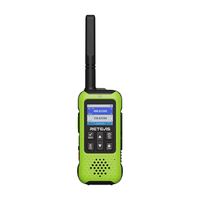


Finally, GMRS permits a brief text message to another specific GMRS or FRS unit. This creates room for radios that provide basic text or status messaging alongside normal voice operation.
Those categories are important because the rule is not a blanket authorization for digital communication. GMRS does not simply allow an operator to transmit any type of information as long as it can be converted into ones and zeros. The permitted data is specifically centered around location information, location requests, and brief messages between radios.
That distinction becomes especially important as operators become familiar with technologies such as packet radio, LoRa, Meshtastic, telemetry links, and other digital systems. What is technically possible over radio is not necessarily what is permitted on GMRS.
How Often and How Long Can Data Be Sent?
Even permitted GMRS data has to remain brief.
Under the normal GMRS rules, an individual digital data transmission cannot exceed one second in duration. That alone tells you quite a bit about how the FCC expects data to be used on the service.
A short location update or compact message can fit into a brief transmission. A continuous stream of telemetry, large data transfer, or always-connected digital link cannot.
There is also a second restriction that is just as important: digital data normally cannot be transmitted more frequently than one transmission within a 30-second period.
Think of these as two separate limits. The one-second rule controls how long each transmission occupies the channel. The 30-second rule controls how frequently those transmissions can occur.
That means shortening a transmission to a fraction of a second does not give a radio permission to send those bursts every few seconds. The frequency restriction still applies.
The rules do provide an exception for radios automatically responding to location interrogation requests. A GMRS unit may automatically respond to more than one such request received within a 30-second period. But for ordinary data operation, the one-second and 30-second limits are the important numbers to remember.
Together, these restrictions make GMRS data best suited to occasional updates rather than continuous digital traffic.
Where and With What Equipment Can You Send Data?
Data capability does not extend to every frequency that can be used for GMRS voice.
The FCC limits GMRS digital data transmissions to the 462 MHz main channels and the interstitial channels in the 462 MHz and 467 MHz portions of the service. The 467 MHz main channels are excluded from digital data operation. Those 467 MHz main frequencies are the channels normally used as repeater inputs.
That creates a useful rule of thumb: just because a frequency can be used as part of normal GMRS voice operation does not automatically mean it can be used for digital data.
There is another restriction that may be more surprising. A GMRS handheld capable of transmitting digital data must have an antenna that is a non-removable integral part of the radio.
Purchase Guide
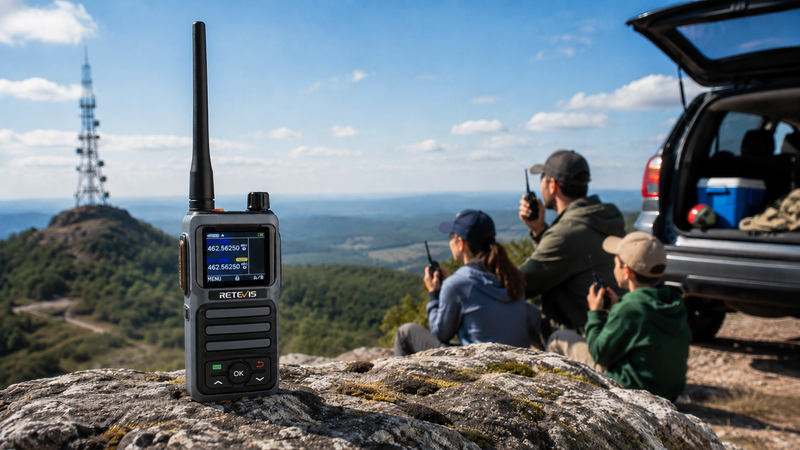
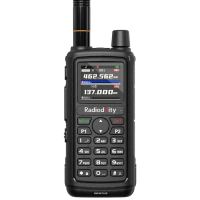
Radioddity GM-30 Plus
High-Performance 5W Handheld GMRS Radio with 1,000 Channels, GPS Tracking, and Expanded Multi-Band Receiver

Use code WAVEGUIDE at checkout.
That equipment requirement highlights an important difference between GMRS and amateur radio.
Amateur radio operators generally have broad opportunities to build equipment, modify transmitters, develop digital modes, and experiment within the technical limits of the amateur rules. GMRS operates differently. Equipment authorization and the way a transmitter was designed and certified play a much larger role.
As a result, an operator should not assume that taking a GMRS-capable radio, installing different firmware, attaching external hardware, or developing a home-built data application automatically makes that system compliant. The information being transmitted is only one part of the equation. The radio itself and the way it operates also have to fit the GMRS requirements.
Common Misconceptions About GMRS Data
Several misconceptions tend to appear once operators discover that GMRS supports digital transmissions.
“GMRS is voice-only.” It is primarily associated with voice communication, but the rules clearly permit limited digital location and text data from qualifying handheld portable units.
“If my radio can transmit it, I can use it.” A radio’s technical capability does not determine whether a particular transmission is authorized. GMRS still has restrictions on the type of information, transmission duration, frequency of transmission, channels used, and equipment design.
“If my data burst is less than one second, I can send as many as I want.” The one-second transmission limit and the 30-second frequency limit are separate requirements. Meeting one does not eliminate the other.
“GMRS data is basically packet radio.” Not really. Amateur packet systems and other digital-radio technologies can support applications far beyond what the GMRS rules authorize. GMRS data is deliberately narrow in both its permitted content and how it can be transmitted.
Understanding those differences is useful because many modern radios are increasingly software-driven. A feature appearing in a menu or being technically possible does not by itself establish that the feature is permitted for GMRS operation.
What GMRS Data Is Actually Good For
The restrictions do not make GMRS data useless. They simply define the kind of job it is suited to perform.
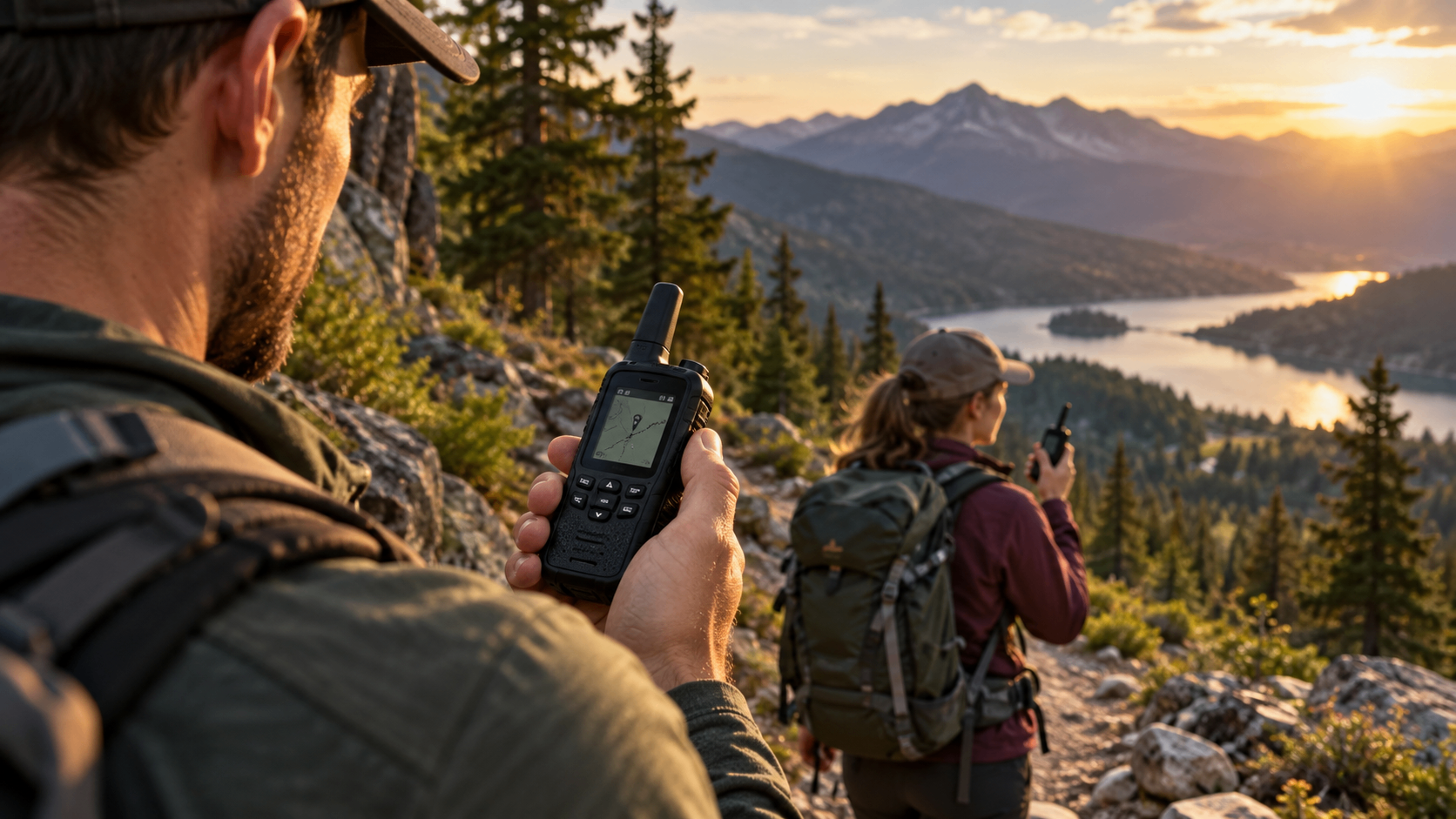
Location sharing is perhaps the most obvious example. Members of a family, outdoor group, work crew, or preparedness team using compatible radios could exchange their positions without depending on cellular coverage.
A location request can also be useful when an operator needs to know where another member of the group is rather than repeatedly asking for a position over voice.
Short text or status messages provide another option when a voice conversation would be inconvenient or unnecessary. A brief message can supplement voice communication without requiring a long exchange on the channel.
That is probably the best way to think about GMRS data overall: as a supplement to voice rather than a replacement for it.
GMRS was not designed to become a high-volume digital network. Its data provisions support small, occasional exchanges that can add useful information to ordinary radio communication while limiting how much airtime those exchanges consume.
Purchase Guide
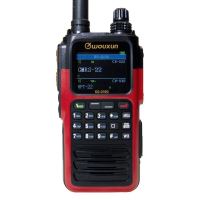
Wouxun KG-Q10G
Ultimate 6W Handheld GMRS Radio with GPS Location Tracking, Superheterodyne Multi-Band Receive, and IP67 Waterproofing


Short text or status messages provide another option when a voice conversation would be inconvenient or unnecessary. A brief message can supplement voice communication without requiring a long exchange on the channel.
That is probably the best way to think about GMRS data overall: as a supplement to voice rather than a replacement for it.
GMRS was not designed to become a high-volume digital network. Its data provisions support small, occasional exchanges that can add useful information to ordinary radio communication while limiting how much airtime those exchanges consume.
The Bottom Line
GMRS is more than a voice-only radio service, but its digital capabilities have clearly defined boundaries.
Permitted handheld radios can exchange location information, request locations, and send brief text messages. At the same time, operators need to account for the one-second transmission limit, the normal one-transmission-per-30-seconds restriction, channel limitations, and the equipment requirements that apply to data-capable radios.
For GMRS operators, the useful question is not simply whether a radio can send data.
It is whether the data—and the way the radio sends it—fits within the GMRS rules.
Purchase Guide
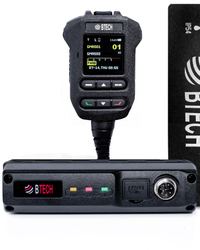
BTECH GMRS-50PRO
The BTECH GMRS-50PRO is a powerhouse mobile unit that bridges the gap between traditional GMRS radios and modern technology. It offers true 50W output, a feature-rich "Connected Mic" UI, and a Bluetooth app interface that makes complex programming remarkably simple for experienced users managing large channel lists or repeater tones.