
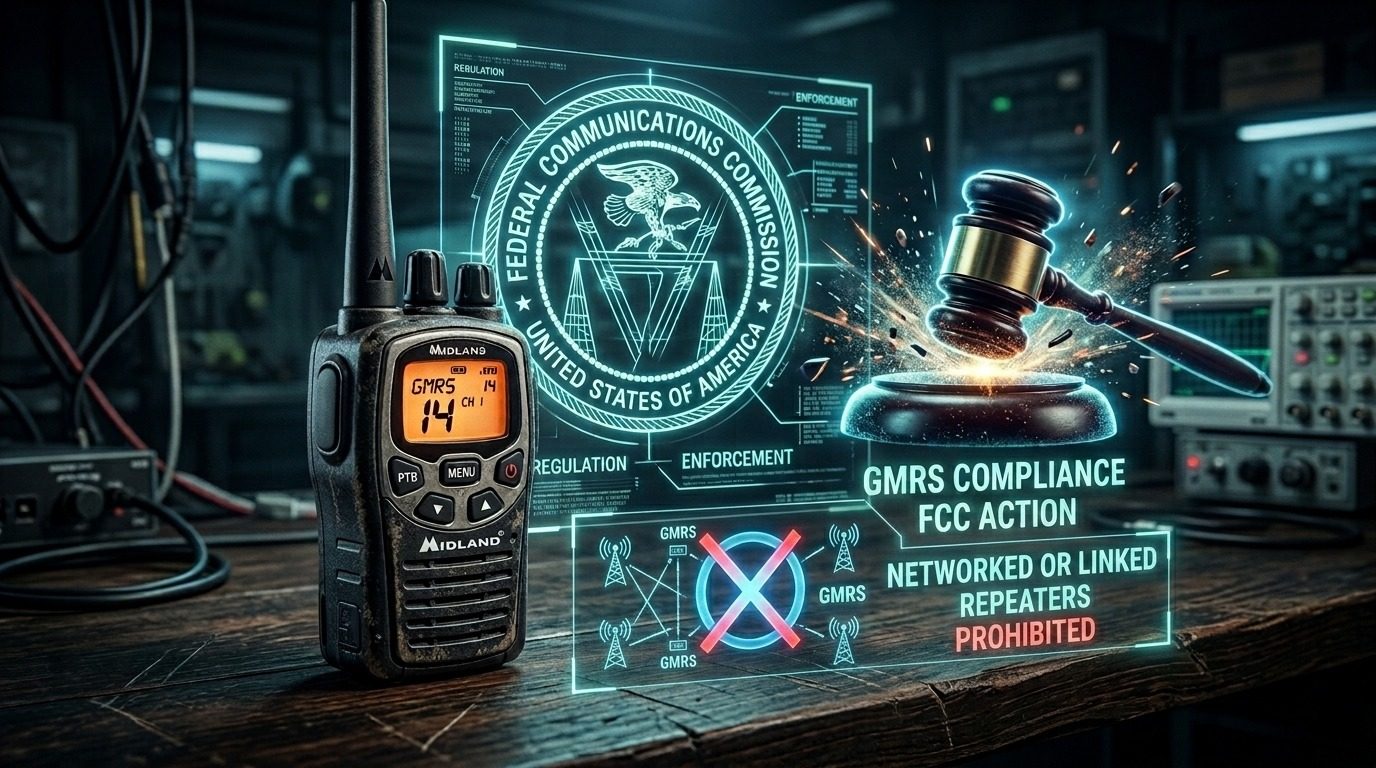
In a landmark enforcement action issued on August 5, 2026, the Federal Communications Commission (FCC) sent a formal Notice of Violation (DA 26-821) to Gary M. Beckstedt, Sr., licensee of General Mobile Radio Service (GMRS) station WQYU407 in Newnan, Georgia. Beckstedt is the founder and primary administrator of the North Georgia GMRS Network (NGGMRS), one of the largest and most widely recognized regional GMRS repeater systems in the United States.
The regulatory action follows an extensive on-site investigation conducted by field agents from the FCC Enforcement Bureau’s Atlanta Office in February 2026, who monitored and documented multiple repeater transmissions across the regional network. The core of the violation centers on 47 CFR § 95.1749, the federal regulation that strictly governs network connectivity and limits how GMRS repeaters interact with external networks like the internet.
What is NGGMRS? Structure, Reach, and Regional Dominance
The North Georgia GMRS Network (NGGMRS) operates as a non-profit membership organization that built an unprecedented regional footprint. Financed through tier-based annual membership dues and member contributions, the group offers access to an extensive grid of commercial-grade, high-power repeaters. In addition to daily radio chatter, NGGMRS hosts structured emergency weather nets, tailgates, and community radio meetups for its reported 1,200+ paying members.
However, the scale of NGGMRS’s infrastructure created unique challenges for local spectrum management. Utilizing mountain-top tower leases and high-elevation sites, the group’s network footprint grew to cover more than 41,000 square miles. Their repeater coverage effectively dominated:
- The Greater Atlanta metropolitan area and Northern Georgia
- Eastern Tennessee and Chattanooga
- Western North Carolina and Upstate South Carolina
Because NGGMRS deployed high-power 50-watt transmitters across virtually every available repeater pair in these regions, non-member local families, small neighborhood clubs, and emergency prep groups were frequently squeezed out of the band entirely.
Backlash and Channel Hogging: The 8-Frequency Saturation
In the General Mobile Radio Service, operators are restricted to just eight main repeater frequency pairs (462/467 MHz range). Unlike the Amateur Radio Service (Ham Radio), which features broad frequency allocations permitting digital voice modes, EchoLink, and AllStar VoIP linking networks, GMRS is codified by federal regulation as a localized, short-range, shared family service.
As NGGMRS tied dozens of repeaters together using a dual-hub IP backhaul architecture (“Central Core” and “Northern Core”), a single user keying up a microphone in Atlanta would instantaneously retransmit across every linked repeater site in three states.
This continuous regional broadcast triggered fierce backlash across the radio community. A widely cited video published on YouTube by user THE CHOP SHOP dramatically demonstrated the extent of this spectrum hogging. In the clip, an operator scans the GMRS band from a single location and demonstrates receiving the exact same NGGMRS voice audio across at least 7 out of the 8 total GMRS repeater channels simultaneously.
Pro Tip: GMRS operates on strictly shared spectrum with no exclusive assignment rights. When installing a local base station or repeater, run line-of-sight studies to ensure your signal footprint does not cause harmful co-channel interference to nearby operators.
Why the FCC Stepped In: Section 95.1749 Explained
Under 47 CFR § 95.1749, GMRS stations may be connected to public switched telephone networks or IP networks only for the purpose of remote control of the station. The FCC explicitly highlighted that using internet links to route, relay, or retransmit voice audio across multiple geographic repeater sites violates federal rules.
The Commission noted that wide-area audio backhauling deprives local operators of access to their nearest repeater channels and defeats the intended regulatory design of GMRS as a local service.
Pro Tip: Internet connections on a GMRS repeater site must strictly be used for out-of-band remote station management (e.g., toggling transmitter power, adjusting squelch, or monitoring site telemetry), never for backhauling live voice traffic.
Community and Influencer Reactions
The enforcement notice triggered massive discussion across forums like RadioReference and Reddit subreddits r/gmrs and r/cbradio:
-
GMRS Community Relief: On
r/gmrs, numerous local operators expressed relief, noting that NGGMRS’s blanket coverage had made standalone, non-linked repeater operation nearly impossible in North Georgia and Chattanooga. -
Southwest Community Radio System: On August 7th, David Adriaanse (WQVS960), President and Secretary of the Southwest Community Radio System (SWCRS), issued a lengthy statement announcing they were disabling linking on their system effective August 9th, despite having many objections to the FCC’s claims about the legality of repeater linking in the NGGMRS Notice of Violation (NOV). Adriaanse called into question the disparity between several statements the FCC makes on its website and in the NOV, versus the actual Code of Federal Regulations (CFR) rules that govern the radio services.
-
Influencer Analysis: Popular YouTube channels such as Ham Radio 2.0 posted breakdown videos analyzing the history of GMRS rules, pointing out that the FCC clarified remote control definitions years ago specifically to prohibit IP audio linking.
-
NGGMRS & Member Response: Discussions on social media indicate that NGGMRS leadership has consulted legal counsel. Meanwhile, users on Reddit reported that the group has already begun setting up parallel 2-meter (VHF) amateur radio repeaters under the North Georgia Amateur Radio Association (NGARA) to migrate their linked network operations over to Part 97 ham radio frequencies where linking is fully permitted.
Under the terms of the Notice of Violation, Beckstedt has 20 days from August 5, 2026, to submit a formal written explanation under penalty of perjury detailing the corrective actions taken to bring station WQYU407 into compliance.
What Are Your Options?
If you’ve been relying on a linked GMRS system for your family’s communication plan, but a single repeater can’t deliver the coverage you need, several powerful alternatives can bridge the gap without relying on traditional cell phones:
1. Push-to-Talk over Cellular (PoC) Radios
At first glance, cellular-based communication might seem redundant—why not just use a standard cell phone? However, modern dedicated PoC radios offer distinct tactical and technical advantages for reliable family contact:
-
Superior Network Redundancy: Unlike standard cell phones tied to a single carrier network, PoC radios utilize multi-carrier roaming data SIMs. They automatically connect to whichever signal is strongest nearby—whether AT&T, T-Mobile, or Verizon—dramatically reducing dead zones.
-
Efficient Low-Bandwidth Data: PoC radios encode voice into small, low-speed digital data packets rather than traditional cellular voice channels or bandwidth-heavy video streams. This allows calls to squeeze through congested towers where standard cellular voice calls fail.
-
Global & Group Reach: Because they route over data networks, you get instant, single-button group communication across town, across state lines, or internationally without paying per-minute roaming rates.
-
Off-Grid Flexibility via Wi-Fi: Many advanced PoC models include Wi-Fi capabilities. This allows them to function seamlessly in areas without cellular service—such as remote cabins equipped with Starlink satellite internet, aboard cruise ships, or deep inside large steel-and-concrete buildings with poor cellular penetration.
-
Hybrid FRS/GMRS Integration: Select PoC units feature built-in FRS (Family Radio Service) dual-mode capability. This gives you the best of both worlds: long-range PoC communication where data/Wi-Fi is available, and direct line-of-sight RF communication to talk with local FRS/GMRS users when completely off the grid.
-
Purpose-Built Efficiency & Low Cost: Running lightweight, streamlined operating systems rather than power-hungry iOS or Android platforms, PoC radios deliver significantly longer battery life and instant “one-button” operation. Most devices include at least one year of data service upfront, and several models offer lifetime service with no recurring subscription fees.
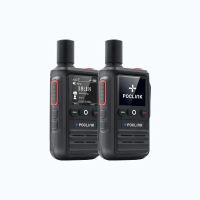


Purchase Guide
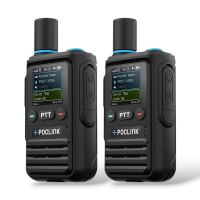
Poclink POC-1 Ultra
PoC + FRS Global Two-Way Radio with GPS
2. Amateur (Ham) Radio Networks
For families willing to invest time into technical training, Amateur Radio provides the most versatile and robust non-cellular network capabilities available:
-
Legal Repeater Linking: Unlike GMRS, the Amateur Radio service fully supports and legally permits linked repeater networks—allowing local repeaters to connect over the internet (via systems like EchoLink, AllStar, or BrandMeister) or via dedicated RF links for massive regional coverage.
-
Extensive Frequency Bands: Access to multiple frequency bands (VHF, UHF, HF, and beyond) allows for tailored communication strategies—from local neighborhood coverage to long-distance, high-frequency contacts without relying on any external infrastructure.
-
Advanced Digital Modes: Supports both traditional analog voice and digital radio modes (such as DMR, System Fusion, and D-STAR), offering crystal-clear audio, GPS location sharing, and text messaging capabilities.
-
Licensing Requirement: Every individual user must pass an FCC exam to earn their own license. While this creates an entry barrier, it results in a skilled household capable of operating advanced communications equipment in emergencies.
Pro Tip: If you’re interested in Amateur Radio, see which license may be for you.
3. Satellite Communicators
When you step completely beyond the reach of cell towers and terrestrial Wi-Fi, satellite communicators provide true global connectivity via low-Earth orbit satellite constellations:
-
True Global Coverage: Devices route messages directly through satellite networks (like Iridium), providing a guaranteed lifeline in the deepest wilderness, offshore, or during total grid failures.
-
Advanced Features: Modern devices have evolved far beyond basic SOS tracking.
-
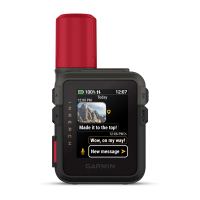
Garmin inReach Mini 2: Offers compact, rugged 2-way text messaging, interactive SOS, location sharing, and basic compass navigation with extended battery life.
-
Garmin inReach Mini 3 Plus: Delivers enhanced multi-media capabilities, including a vibrant color screen, support for longer text messages, photo sharing, and 2-way voice messaging complete with automated text transcription for easy listening in noisy environments.
-
-
Considerations: Devices require a clear line of sight to the sky, and active satellite communication requires an ongoing monthly or annual subscription plan.
Purchase Guide
Garmin inReach Mini 2
Off-Grid Satellite Communicator
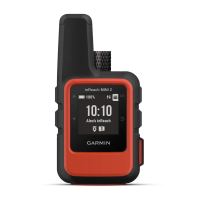
Purchase Guide
Garmin inReach Mini 3 Plus
Off-Grid Satellite Communicator with Voice and Photo Support