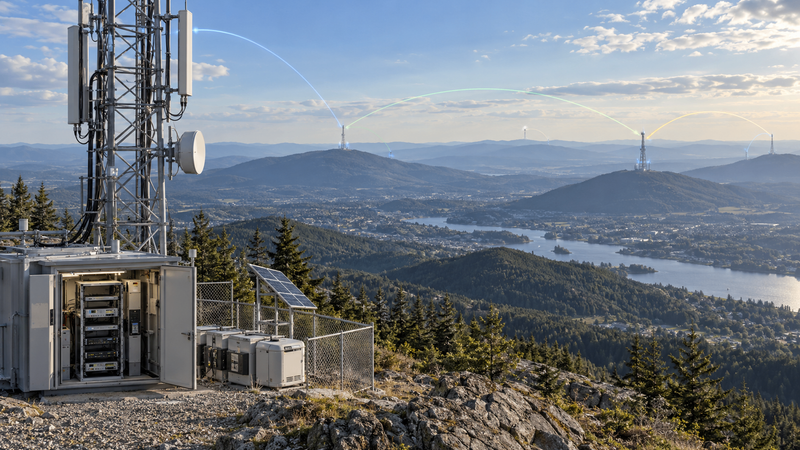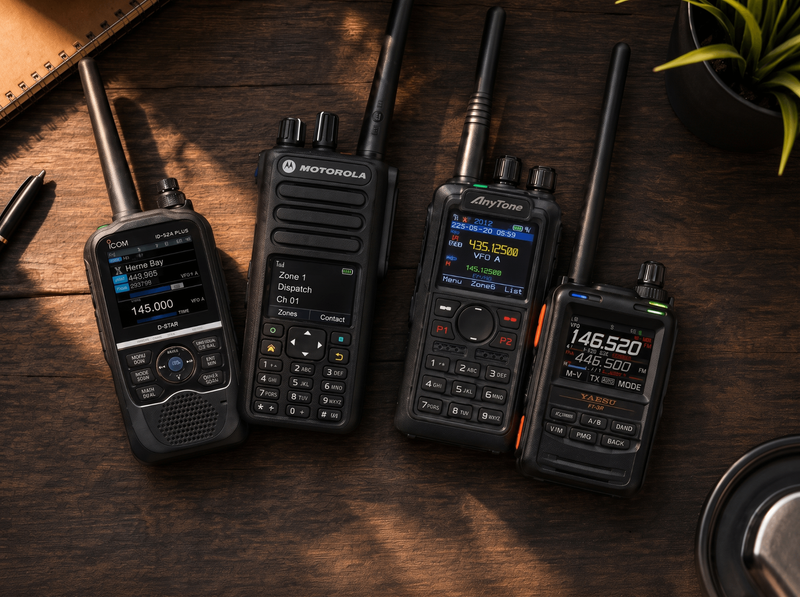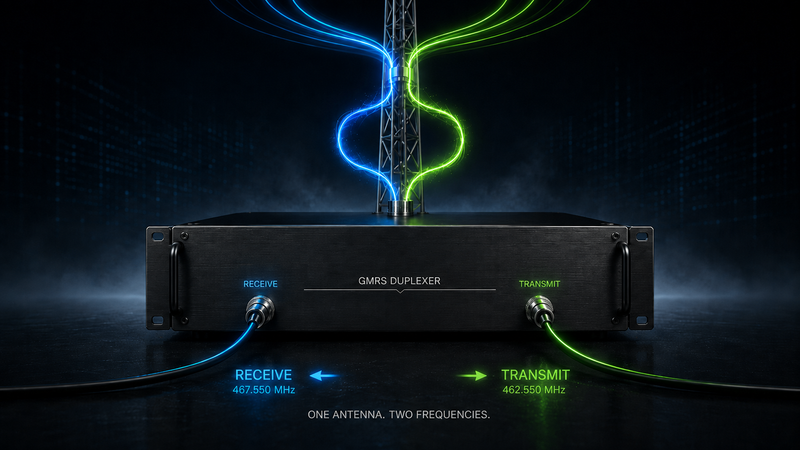


Getting a repeater on the air requires plenty of technical decisions. You have to choose a location, configure the controller, install an antenna system, manage feed-line losses, and make sure the transmitter and receiver can coexist.
But once the hardware works, another decision becomes just as important: Who is the repeater actually for?
Some repeater owners want anyone in the local radio community to be able to use their system. Others build a repeater specifically for a family, club, preparedness group, or small circle of operators. Many land somewhere between those two approaches and welcome new users after they ask permission.
There is no single access policy that is right for every repeater. The better approach is to decide what you want the repeater to accomplish, then create an access policy that supports that purpose.
Start With the Repeater's Purpose
Before deciding whether your repeater should be open or restricted, ask a simpler question: Why did you build it?
A repeater intended to provide broad coverage for a local radio community has a very different mission from one installed primarily so several family members can communicate across town.
Common purposes include:
- General local communications
- Supporting a radio club or organized group
- Family and friends
- Emergency preparedness
- Communications around a property, event, or activity
- Some combination of private and community use
Once you identify the purpose, the access decision often becomes much easier.
If you invested in a high-site repeater specifically to encourage activity across an entire county, keeping access limited to three people probably works against that goal. On the other hand, if the repeater exists primarily to support a family communications plan, there is nothing inherently wrong with limiting who uses it.
The access policy should support the repeater’s mission rather than define it.
Open Repeaters: Maximum Access, More Responsibility
An open repeater generally welcomes properly licensed operators without requiring them to contact the owner first.
Open systems can be tremendously valuable to the radio community. They give new operators somewhere to make contacts, provide coverage to mobile users and travelers, support local nets, and often become informal gathering places for operators throughout an area.
They also make good use of infrastructure. A well-positioned repeater that covers a large area can serve dozens or even hundreds of operators instead of sitting silent most of the day.
But opening the door also means accepting some loss of control.
More users can mean more traffic, longer conversations, accidental interference, inexperienced operators, and occasionally someone who simply refuses to follow reasonable operating practices.
That does not mean an open repeater has to be a free-for-all.
Open access and unlimited access are not the same thing.
Repeater owners can still establish reasonable expectations regarding courtesy, excessive use, scheduled nets, or other operating practices. For GMRS specifically, FCC rules expressly allow an individual licensee to permit anyone to benefit from the operation of the licensee’s repeater, limit its use to specific people, or disallow particular users when necessary.
Private Repeaters: Control and Predictability
At the other end of the spectrum is a private repeater intended for a defined group.
That group could be a family, several friends, members of an organization, or operators participating in a particular activity.
The biggest advantage is predictability. The owner generally knows who is using the system and why. Traffic levels are easier to manage, operating practices can be agreed upon in advance, and problems are usually easier to resolve.
Private systems can make particular sense when the repeater was installed for a specific operational purpose rather than as general community infrastructure.
The tradeoff is that other operators within the coverage area may hear a perfectly usable repeater but not be invited to use it.
That isn’t necessarily a problem. What matters is making the policy reasonably clear.
A repeater that intentionally serves a small group is different from one whose owner never decided on an access policy at all.
Permission-Based Repeaters: The Middle Ground
For many first-time owners, permission-based access offers an attractive compromise.
Instead of allowing everyone to use the system automatically, the owner asks new users to make contact first. Once approved, they are welcome to use the repeater.
This gives the owner some control while still allowing the user community to grow.
It also creates an opportunity to communicate expectations before problems occur. A new user can learn whether the repeater hosts regular nets, whether certain times are commonly busy, and whether there are any operating practices particular to that system.
The danger is making the approval process unnecessarily difficult.
If operators need to track down an unknown owner through several websites, wait weeks for an answer, or navigate a complicated application process simply to make an occasional contact, a supposedly permission-based repeater effectively becomes a closed one.
If you require permission, make obtaining it straightforward.
Publish a contact method wherever you list the repeater and give users a simple explanation of what you expect from them.
Establish Expectations Before You Need Them
Regardless of which access model you choose, establish the basic operating culture early.
You probably do not need three pages of rules.
For most repeaters, a short set of reasonable expectations is easier to understand and easier to enforce. Depending on the system, those might include leaving a short pause between transmissions, avoiding unnecessarily long conversations during busy periods, yielding to emergency traffic, observing scheduled nets, and following applicable identification and licensing requirements.
Those pauses between transmissions are particularly useful. Besides giving another station an opportunity to join the conversation, they can provide an opening for someone with urgent traffic.
The important part is making expectations proportional to the problem you are trying to solve.
A quiet repeater serving ten operators probably doesn’t need an elaborate operating manual.
Good repeater etiquette should make the system easier to share, not make operators nervous about pressing the push-to-talk button.
When Problems Happen, Consistency Matters
Sooner or later, someone will operate differently than you would prefer.
It may be a new operator who doesn’t understand repeater etiquette. It might be someone unfamiliar with the local system. Or it might be someone deliberately creating problems.
Those situations deserve different responses.
When practical, simple communication often solves problems caused by inexperience. Explaining an expectation is usually more productive than immediately treating a minor etiquette mistake as intentional misconduct.
Repeated or deliberate abuse is another matter.
Owners need the ability to manage the systems they maintain, and access may sometimes need to be restricted. The FCC has long recognized that GMRS repeater operators may limit the use of their systems rather than being required to provide unlimited access to third parties.
Whatever policy you establish, apply it consistently. Users quickly notice when the same behavior is acceptable from one operator but unacceptable from another.
Choose the Community You Want to Build
A repeater is more than a transmitter, receiver, duplexer, controller, and antenna.
Once other people begin using it, it becomes a small radio community.
That means choosing an access policy is partly a technical-management decision and partly a decision about what kind of community you want that repeater to support.
For a system intended primarily as a community resource, open access may make the most sense.
For a system built around a specific family, group, or operational purpose, private access may be appropriate.
And if you want to welcome additional operators while maintaining some oversight, permission-based access provides a useful middle ground.
None of those decisions have to be permanent.
A new repeater might begin permission-based while its owner learns how much traffic it attracts and later become fully open. An open repeater experiencing persistent congestion might adopt additional operating guidelines. A private system may eventually develop into a broader community resource.
The important decision isn’t simply whether your repeater is open or closed.
It’s knowing who you built it for, what you expect from the people using it, and communicating both clearly.